
The challenge
AI load is an entirely new burden for the power grid
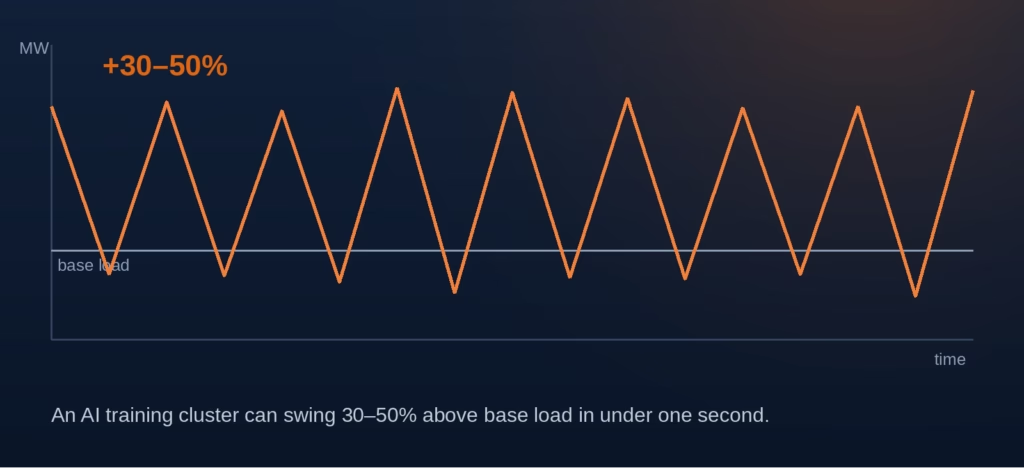
GPU clusters swing their power draw in milliseconds – not smoothly, the way traditional data centers do. An AI training cluster can swing 30-50% above base load in under one second, and those fast swings propagate out into the grid and toward local generation.
30-50%
load swing above base, in under a second.
ms
Power steps in milliseconds, not minutes.
The problem
Two problems decide whether the project succeeds
A viable connection to solve both at once – and the same equipment has to do it.
Extreme load variability
- Fast power swings degrade power quality at the connection point.
- Torsional pulsation wears generators and motors over time.
- The grid company can reject a load that is too variable.
Large loads must not simply “disappear”.
- On a grid fault the data center must not suddenly disconnect.
- A sudden dropout threatens grid stability.
- The grid owner requires ride-through – staying connected through faults.
The solution has to deliver both at the same time – load smoothing AND ride-through.
What`s at stake?
The consequences if this is not solved.

Poor power quality
Voltage variation and flixker at the connection point.

Damage to generators
Torsional pulsation wears down turbines and motors over time.

Rejected or delayed connection
The grid company can refuse interconnection when the load swings too much.

Risk to the grid
A large load that disappears is like a power plant falling out.
The solution
A grid-forming BESS in parallel
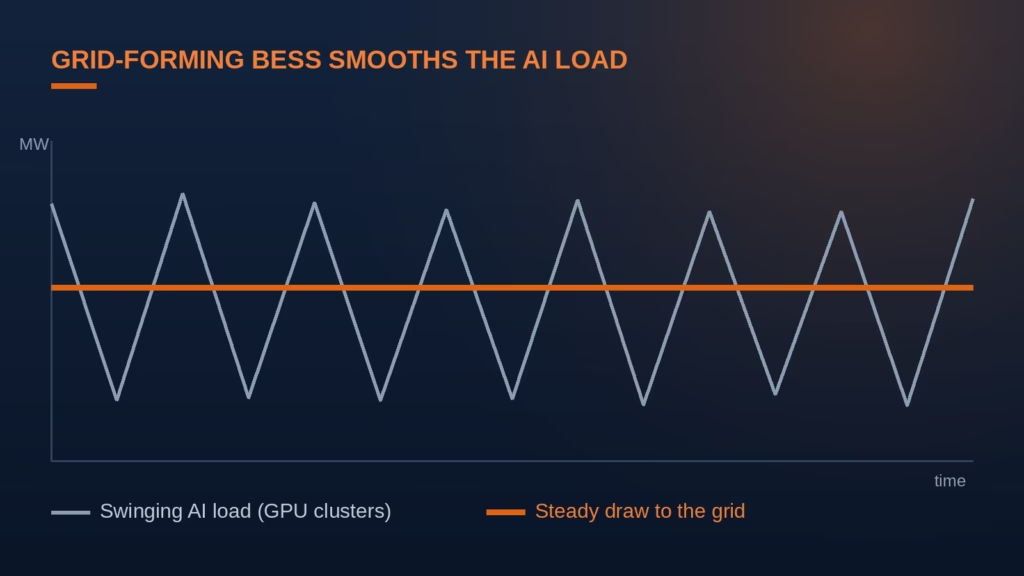
A battery energy storage system running in parallel absorbes the swings and forms a stable interface to the grid.
- Smooths the load toward the source – the grid, turbine or motor is proteced.
- Rides through grid faults without destabilizing the nework.
- The same solution works both grid-connected and in island mode.
Response time – Why milliseconds decide the outcome
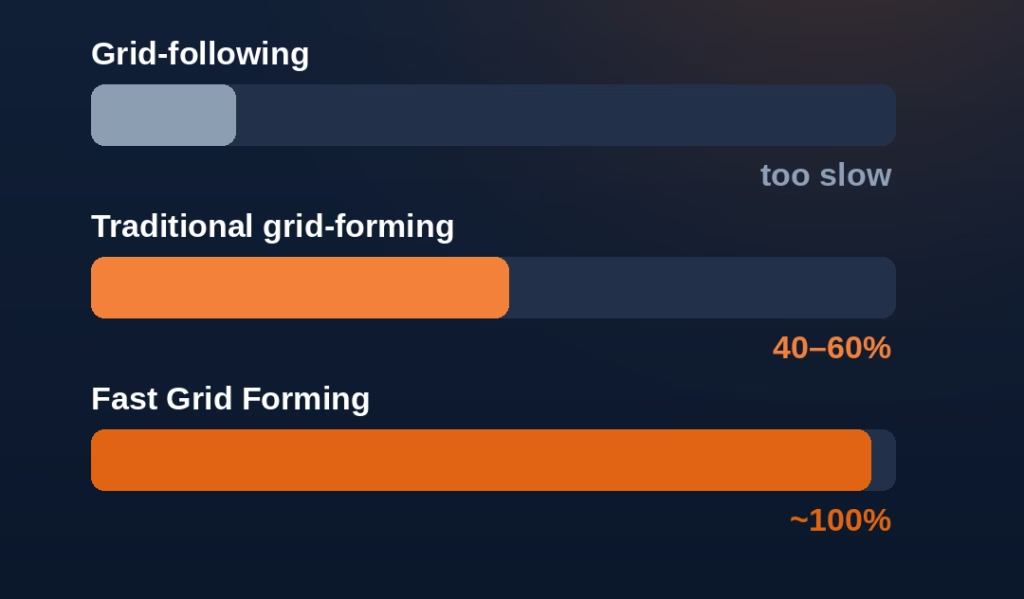
Grid-following control is too slow – a two-to three-digit millisecond delay from the controller. Traditional grid-forming reacts within a frew mililseconds, but compensates only part of the swing. Fast Grid Forming compensates close to 100% of the load swing.
Battery health
The battery is not kept full – it cycles for long life
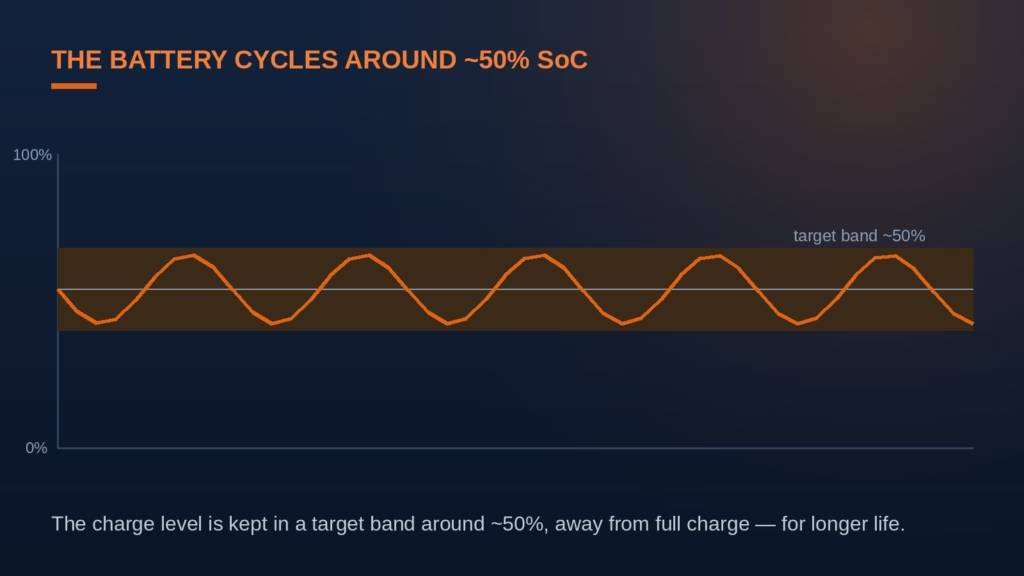
- Cyclic operation around ~50% state of charge – deliberately not permanently full.
- High state of charge combined with heat accelerates ageing – which we avoid.
- the energy management system keeps the charge level inside a target band.
- Reserve for ride-through stays available without keeping the battery full.
What is new in Norway: the grid owner`s requirements shape the delivery
For a Norwegian facility with a BESS, the requirements are set by the grid owner and STATNETT – and they are moving.
Battery = “power park”
Under NVF 2025/2026 the battery is treated as a production facility, classified type A-D.
Intentional islanding vs. protection
Distribution networks with voltage stability issues
Capacity and queue
Transmission systems requiring dynamic voltage support
Power quality and compliance
Reactive power and project specific documentation must be delivered.
The requirements are in motion – an update to NVF is out for consultation in 2026.
Capacity and queue
Grid capacity is a real bottleneck – and an opportunity
Grid capacity has become a scarce resource across large parts of the country. Consumption above 1MW must pass a maturity assessment to secure a place in the queue.
A flexible load (BESS+grid forming) moves through the queue faster. By shaving peak power, the solution can reduce the grid connection contribution.
Source: Statnett, reserved capacity as of March 2025.
The PSW model
World-leading technology + local grid expertise
One accountable partner – from the technology to an approved grid connection.
Power – the technology
- Energy-storage inverters with grid forming
- >90% efficiency
- Modular 0.6-7.5MW
- Fast grid forming: load smoothing + ride-through
PSW – the delivery in Norway
- Grid dialogue with the grid owner and Statnett
- Functional requirements, compliance and documentation
- System integration, automation and commissioning
- Local support – one accountable supplier
Four reasons to choose PSW
We master the technology
Load smoothing and ride-through, proven in practice
We handle the grid dialogue
Capacity, NVF 2025/2026, islanding and grid-connection contribution.
We secure the requirements
The equipment meets both end-customer`s and the grid owner` s requirements.
We reduce risk
One accountable partner / a shorter path to commissioning.
The building blocks we deliver
A complete, integrated package / from grid-forming inverters and batteries to power quality and control software.

Grid-forming inverters
0.6-7.5MW
>99% efficiency
Modular energy-storage inverters with Fast Grid Forming that provide load smoothing and ride-through in one device.
Battery energy storage (BESS)
Cabinets to 705kWh
Containers to 5.6MWh
1500 VDC cabinets, containers and stacked systems sized for the required autonomy and cycling profile.
Utility-scale UPS
Up to 3.75MVA
690VAC
Outdoor, medium-voltage UPS that delivers true UPS-grade power quality with or without generator backup, and can export excess energy back to the grid.
STATCOM
Up to 5MVA
690VAC
MV skid to 36kV
Fast, precise reactive-power support for voltage stability and power quality at the connection point.
DC switchboards
5-15MW
The central hub tying batteries, generation and fast-response loads together with modular protection.
Energy control & management software
Real-time control
SCADA/EMS integration
Blackout prevention, monitoring and optimization that keep the charge in its target band and orchestrate the whole system.
Let`s make this predictable
We propose a technical review of your specific connection point – capacity, functional requirements and solution design.